
The firing of 11 Starlink antennas in Bulgaria, restrictions on military satellite communications, and uncertainty over U.S. intelligence are seriously undermining Ukraine’s ability to counter the recently intensified Russian attacks. At the same time, questions are being raised about whether we are witnessing a spillover of the conflict and hybrid attacks to other EU countries, as well as about U.S. support for Ukraine in its increasingly weak confrontation with Russia. At the same time, the agreement between Washington and Moscow on the purchase of Russian diesel and the pressure to reach an energy truce are deepening distrust between the allies.
Attack in Bulgaria raises new security questions
The ignition of 11 out of a total of 17 antennas connected to the Starlink satellite system at a facility near Sofia has raised new questions about the security of the communications infrastructure that is also used in the war in Ukraine.
According to Bulgarian MP Ivaylo Mirchev, two masked men deliberately set fire to the facility's equipment, and Bulgarian security services have launched an investigation. On October 15, the Bulgarian news agency BTA reported that suspects had been identified, but authorities did not disclose details so as not to jeopardize the investigation.
According to Mirchev, the antennas are an important link to SpaceX satellites, which are also used for communications by the Ukrainian military. He raised questions about whether security services responded to possible threats in a timely manner. However, it has not yet been determined who was behind the attack, nor has it been proven that its purpose was directly to disrupt Ukrainian military operations.
The incident takes on broader significance due to the simultaneous problems with Ukraine's military satellite communications and uncertainty over the continuity of US military and intelligence assistance. However, there is no evidence linking the burning of the antennas in Bulgaria to a decision by the US government to limit Ukraine's capabilities.
Europe admits it can't replace Starlink quickly
The European Union openly admits that there is currently no ready alternative that could replace the communication opportunities that Ukraine is receiving through Starlink.
"Starlink is truly necessary for Ukraine and, unfortunately, Europe cannot replace this capacity in the short term," EU High Representative for Foreign Policy Kaia Kallas said at a European Council summit held in Brussels on Friday.

Europe has alternatives, including Eutelsat satellite services and the OneWeb network, but they cannot immediately and completely replace SpaceX’s infrastructure. The problem is not just the number of satellites. Appropriate user terminals, reliable coverage, sufficient data transmission, low signal latency, protected communications, and the ability to integrate the systems with the existing Ukrainian military infrastructure are needed.
Why is Starlink so important to the Ukrainian military?
To understand the severity of the problem, it is necessary to explain how the system works and why its limitations can affect the course of military operations. Starlink uses thousands of satellites in low Earth orbit, which provide broadband Internet even in areas where there is no reliable terrestrial communications infrastructure. Because the satellites are relatively close to Earth, the signal delay is small compared to traditional geostationary satellites. This is especially important when fast data exchange and continuous communication are required.
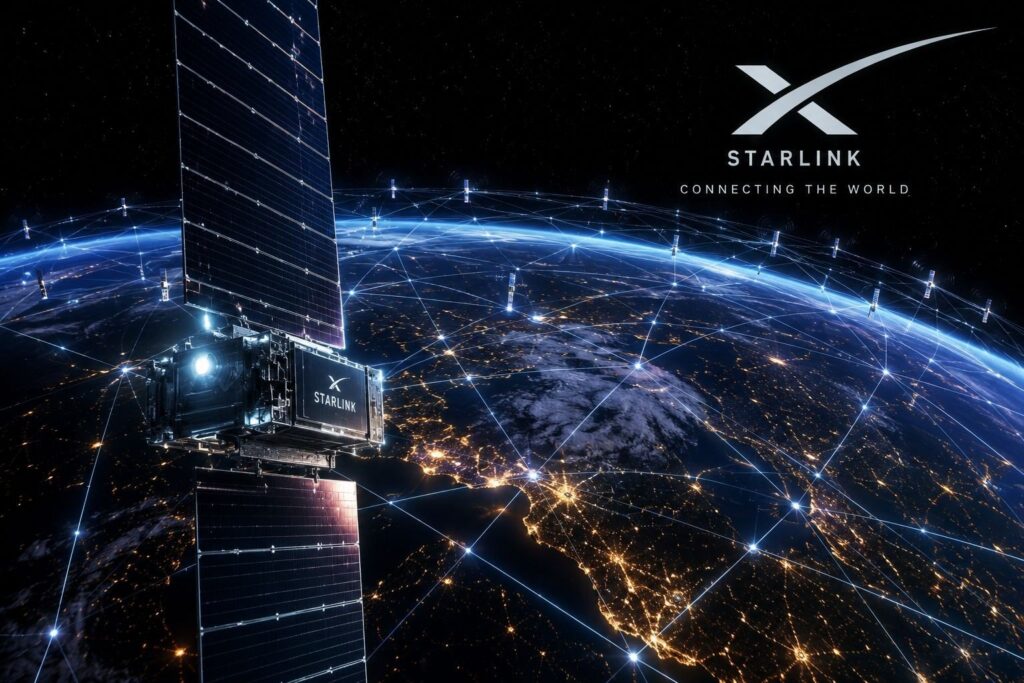
In Ukraine, the system has several key functions: drone control, inter-unit communication, battlefield data transmission, as well as logistics and coordination. In modern warfare, all of these areas of communication are of paramount importance. Communications connect reconnaissance, command, and action, so if data arrives late or the connection is interrupted at a critical moment, it can reduce the effectiveness of operations.
What is the difference between "Starlink" and "Starshield"?
Starlink is a commercial satellite internet network, while Starshield is a system designed for government and military users, with additional security features and capabilities tailored for national security operations. The two systems share some of the technological foundation, but are not identical and are not entirely interchangeable.
According to Ukrainian military officials, recent restrictions have affected some drone operations, causing failed missions and the loss of aircraft. Although the connection has been partially restored, the incident has shown how vulnerable the military is, depending on infrastructure over which it does not have full control.
Musk distanced himself from responsibility and pointed to the US government
Following criticism from Ukraine that restrictions on satellite communications were hindering military operations, Elon Musk responded that Starshield is owned and controlled by the US government.
"All speed or usage restrictions are set by the US military, with the final decision being made by the president," Musk wrote on the social network X.

With this, the owner of SpaceX rejected his company's responsibility for the limitations of the military system and directed it at Washington. At the same time, he emphasized that the commercial Starlink is a service of SpaceX and that its use is limited to civilian and defense activities, not offensive military operations.
Intelligence is the second critical front
In addition to satellite communications, Ukraine relies heavily on US intelligence, which is used to provide early warning of Russian missile attacks, track military movements, and identify targets for Ukrainian operations.
The US space-based infrared tracking system can detect missile launches and help provide early warning of danger. According to military experts, European allies have very limited options to quickly replace this capability.
If Washington were to restrict these services, the consequences could be dramatic. Ukraine would have less time to react to missile attacks, would find it harder to coordinate defensive operations, and would have less information to plan its own strikes.
Energy truce and Russian diesel: what does Trump want?
The current tensions are also underpinned by a broader political and economic reckoning. The US administration is trying to reach an agreement to stop attacks on Russia and Ukraine's energy infrastructure, and Trump has linked his initiative to the need to lower fuel prices.
Washington has been pressuring Kiev to stop attacks on Russian refineries. At the same time, Trump announced a deal under which Russia is to deliver more than 300.000 metric tons of diesel to the US and world markets. Washington has temporarily eased restrictions on Russian diesel, arguing that the additional supply could help lower fuel prices.

This comes at a time of intense pressure on the US energy market and ahead of the November congressional elections. Trump has blamed Ukrainian attacks on Russian refineries for driving up prices, while Zelensky has said Russian diesel will not significantly lower prices in the US, but will provide Moscow with additional revenue.
Are NATO allies starting to doubt Washington?
The uncertainty surrounding American support is causing concern among European allies, but so far no one is coming forward with accusations that the US government is deliberately reducing Ukrainian military capabilities.
What is evident is the growing concern in European capitals about dependence on American technology and intelligence systems. Polish Foreign Minister Radoslaw Sikorski publicly asked Musk whether politics affected the services his company provides, showing that the issue is no longer treated as just a technical problem.
For European countries, this situation is a warning: if one state or company can influence access to key military communications, then political disagreements between allies can turn into a serious risk on the battlefield.
That's why European governments are increasingly talking about reducing their reliance on decisions over which they have no control and developing their own satellite systems, independent intelligence capabilities, and more secure communications networks. But that's easier said than done. And it takes a lot of time.


